Even in Word, there is a set of tools for users to calculate calculations, such as calculating sums in Word without the need for other supporting tools. We can calculate the total of Word in a row or in a column, even calculate the total in multiple rows or columns. Below are ways to calculate the total in Word.
Using the Formula tool to calculate the sum in Word
To calculate the total in Word, you will need the Formula tool to enter and calculate formulas in the table. When calculating the total in Word or performing formulas in Word, users can do the following:
- Data position argument : This is to determine the position of the data that you want to sum in the directions Left, Right, Above, Below depending on the cell position you use to sum. Suppose you want to sum the data on the left side of the sum cell, you will use =SUM (LEFT).
- Referencing data position by column and by row : Determining data position is similar to Excel. Tables in Word are also implicitly numbered in order by row from 1, 2, 3, …, and numbered in order by letters A, B, C, D …
Instructions for calculating sums in Word
Calculate Word sum using data position argument
Step 1:
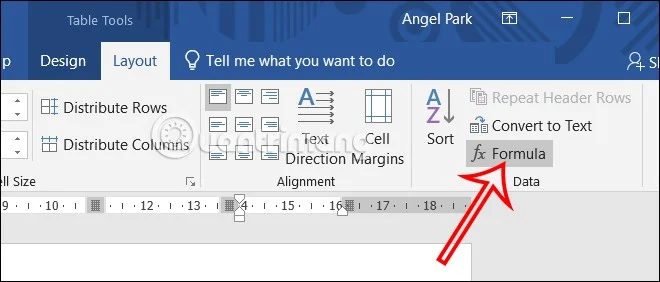
In the result input box, we click on the Layout tab and then select Formula in the toolbar above.
Step 2:
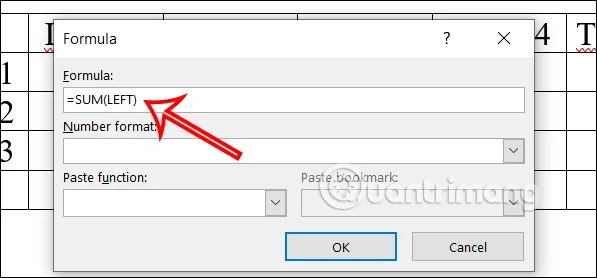
Display the Formula interface with the default using the SUM calculation formula as shown.
To calculate the total of a row, type the formula =SUM (LEFT) if the data is to the left of the total cell or =SUM (RIGHT) if the data is to the right of the total cell.

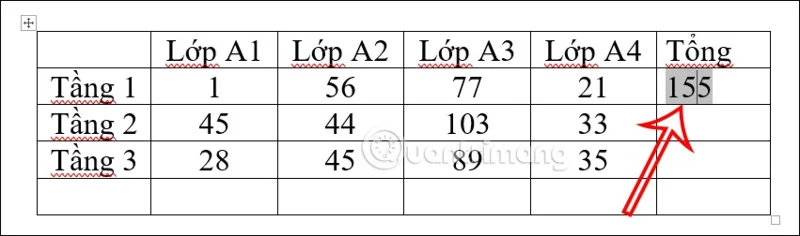
Immediately after that we get the result of calculating the sum of a horizontal row as shown below.

Step 3:
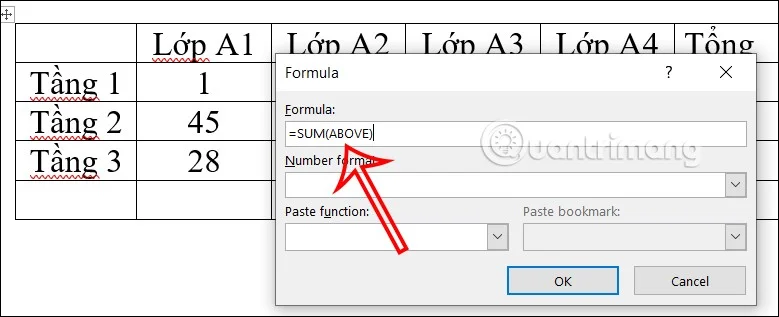
In case you want to calculate the total of a column, you type the formula =SUM (ABOVE) if the data is above the total cell or =SUM (BELOW) if the data is below the total cell.

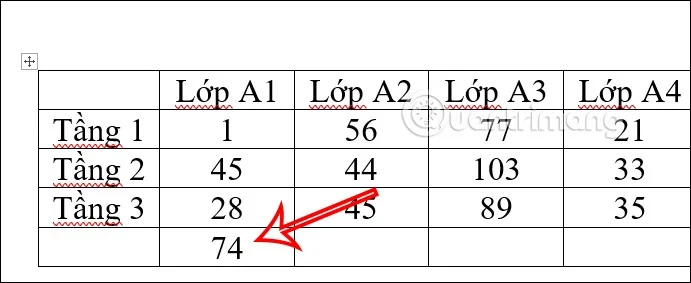
Then we also get the sum of 1 column as shown.

Calculate sum in Word using data location reference
General formula: =SUM(X1:Xn), where:
- X is the column symbol you want to reference (A, B, C, D, …)
- n is the row number you want to reference (1, 2, 3, 4, …)
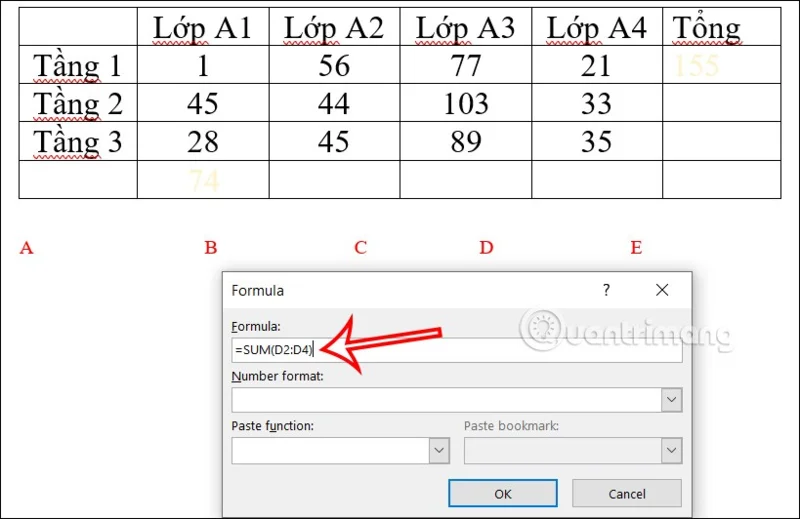
For example, to calculate the total number of students in Class A3, click on the result box and type Formula. Next, enter the formula =SUM (D2:D4) and click OK.

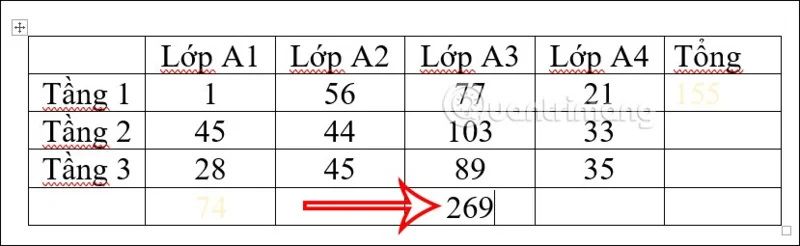
Immediately after that we get the results in columns as shown below.

Instructions for calculating sum in Word by multiple cells
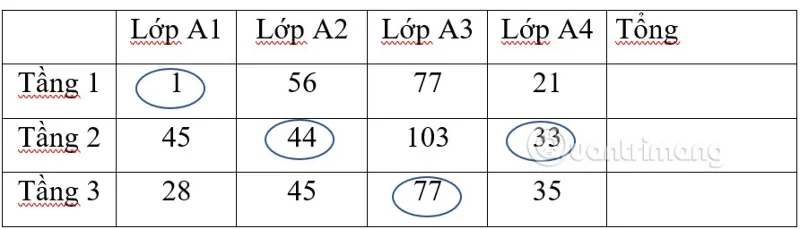
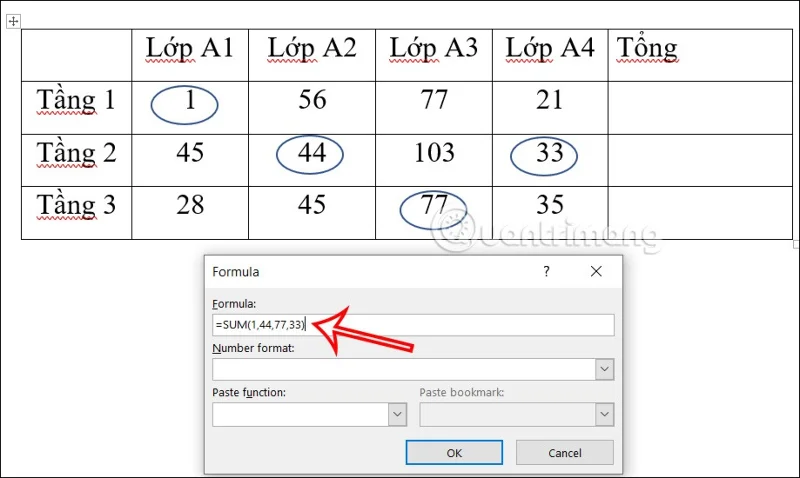
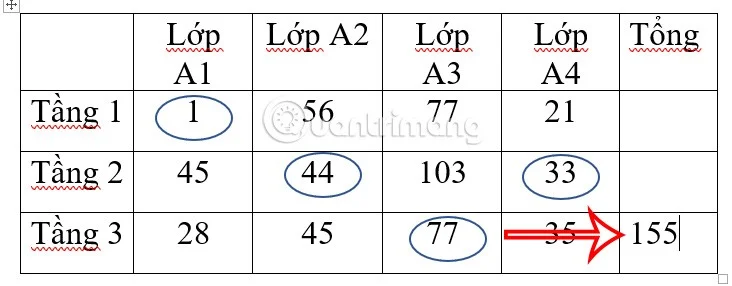
Formula to sum in Word by multiple data cells =SUM(Xn1, Xn2, Xn…). For example, you will need to sum the circled numbers in the table below.

In the total cell, click Formula then click the calculation formula for the selected cells as shown.

Immediately after that we also get the results for the selected cells.

How to display formulas in Word
Step 1:
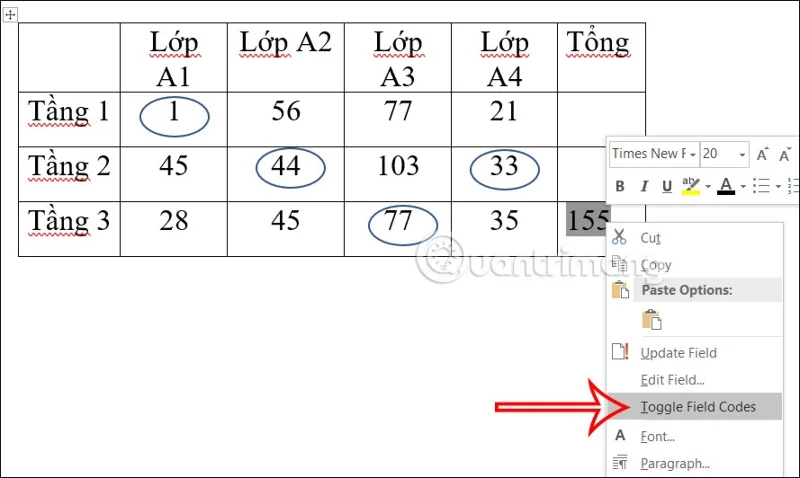
In the result, if you want to see the formula, right-click and select Toggle Field Codes .

Step 2:
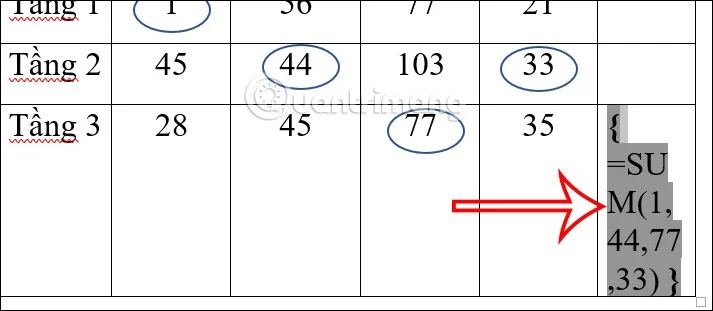
You will then also see the sum formula in Word with the data you want. Click Toggle Field Codes again to display the result.