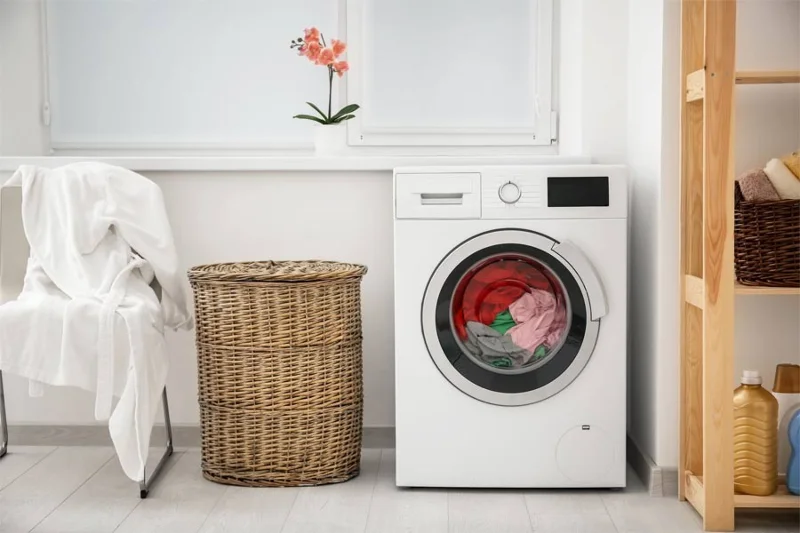
The washer dryer is a popular appliance in every Vietnamese family today. So how to use the washer dryer for the longest possible time ? Let's find out together!

Simple Ways to Extend the Life of Your Washer & Dryer
Make sure the washing machine is balanced
Washers and dryers are pretty dynamic machines—they create a lot of movement and momentum while spinning heavy, wet clothes. It’s important that they’re properly leveled and balanced, or the drum will become misaligned, causing increased wear and tear on the entire machine.
When setting up the machine, the feet should be adjusted to ensure that the machine is level and does not sway from side to side. But you should also check the machine regularly with a level, if the equipment is not level, it is time to adjust until it is level. This only takes a few minutes and can really extend the life of the machine.
Read the maintenance instructions carefully.
Your washer and dryer come with instructions for use, and your clothes come with basic care instructions. You should read both for information such as:
- Amount of detergent : Using too much detergent can damage your washing machine over time by causing residue to build up inside the machine, leading to mold and other damage. Your owner's manual will give you instructions on how much detergent to use.
- Detergent Type : Check to see if your washing machine is a high-efficiency model. If it is, you need to use an equivalent detergent. Otherwise, your washing machine will have difficulty removing soap suds and the additional wear will shorten the life of your machine.
- Location of all filters, drains, and canisters: Things you will need to clean and check in the future.
- Error codes, maintenance information and other troubleshooting : Can go a long way in keeping your equipment running longer, as you'll have some clues on how to troubleshoot basic problems.

Clean inside
Many people believe that dry cleaners are self-cleaning because they are appliances that wash clothes. While it may seem logical to assume that a washing machine — which is constantly immersed in soapy water — doesn’t need to be cleaned, this is simply not true. Regularly cleaning your washer and dryer will greatly increase their efficiency and lifespan:
For washing machines, simply use a little vinegar and baking soda in an empty load to clean the machine. You can also buy cleaning products if DIY cleaning doesn't work. You should also clean the filter and agitator, and give the entire machine a good scrub, inside and out.
For dryers, you should clean the lint filter, exterior vents, and ducts (you can purchase a drill-powered duct cleaner to do this) and wipe down the inside of the drum.
Clean the exhaust pipe
The drain hose from your washing machine can become clogged with what scientists call scum over time. You can usually unclog the drain hose without opening the machine—it’s probably just stuck in place. Remove it and use a garden hose to blow the clog out of it with a little water pressure, and your washing machine will drain more easily—leaving your clothes drier and less wear and tear on the machine.
Check pockets before putting clothes in the washing machine
Everyone washes something they forget in their pockets from time to time, and it may seem harmless. But metal objects like coins, keys, or screws left behind can scratch the drum, damage your appliances, and clog your filters and drains. So one of the easiest ways to keep your old washer and dryer running smoothly is to always check your pockets before you load your clothes into the washer.

Don't give too much or too little
Washers & dryers are designed for a certain amount of laundry, and loading too much or too little can cause damage to the appliance:
Your washer should run full, but not overloaded. You can weigh your clothes and compare them to the capacity of your washer, which is pretty accurate—but you can probably just eyeball it. In general, if your washer is three-quarters full, you’re not overfilling it. Anything less than half full is underfilling, and both can cause damage and wear and tear on your equipment.
Conversely, dryers typically run best with lighter loads. Keeping your load at about half the dryer's capacity is a good habit—this will ensure your clothes dry more evenly and more quickly, while not putting too much strain on your dryer.