Coco de Mer, the worlds largest and most expensive coconut

Coco De Mer or Coco Der Mer is a famous coconut because it is the most expensive in the world. Here are some interesting information about this coconut.

The Coco de Mer, scientifically known as Lodoicea maldivica, is a species of palm tree native to the Seychelles Islands in the Indian Ocean. This eye-catching tree has captivated the human imagination for centuries due to its unique characteristics and legendary appeal.

In this article, we'll delve into the fascinating science facts surrounding the Coco de Mer, exploring its fascinating biology, historical significance, and cultural legends.

One of the most remarkable aspects of the Coco de Mer is its slow growth and longevity. It takes about six to seven years for the seeds to germinate and another 25 to 30 years before the tree begins to produce fruit. The Coco de Mer is known for its exceptional longevity, with some individuals surviving for several hundred years, adding to the mystery surrounding the tree.

Coco de Mer is a member of the Arecaceae family and is the only species in the genus Lodoicea. It is the rarest and most expensive coconut in the world. Each Coco de Mer coconut costs an average of £300 (about $385).

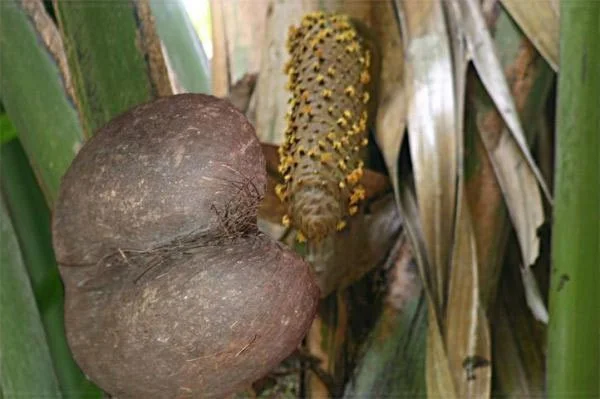
The Coco de mer tree grows very tall, up to 25-34m, with fan-shaped leaves about 7-10m long and about 4.5m wide. This type of coconut only grows on Praslin and Curieuse islands in the Seychelles, so it is very rare. In the world, this type of coconut is very famous for its large size and its rather sensitive shape, exactly like a woman's butt. The Coco de mer fruit holds the record for being the largest and heaviest fruit in the world. On average, a coconut weighs about 23 to 30kg, with a diameter of 30-40cm.

Coco de Mer, the world's largest and most expensive coconut

Coco de Mer fruit is considered the "treasure of Seychelles" and is so rare that tourists coming here are still willing to spend a large amount of money to own it.

Coco de Mer, the world's largest and most expensive coconut

Another interesting thing is that the male flowers and coconuts of this tree are both sensitive in shape.

Because it is so heavy, when it falls into the sea, the Coco de mer fruit does not float but sinks to the bottom of the sea. A long time later, when the shell has been decomposed by the sea water, its seeds can float to the surface of the water and drift to different regions. Because at this time, the seeds do not have nutrients to sustain themselves, when they drift to new land, they rot and cannot germinate.
Laisser un commentaire

Comment jeter une batterie au lithium à Angers ? Les points de collecte et les précautions

Comment jeter une batterie au lithium à Angers ? Les points de collecte et les précautions

À Angers, découvrez où déposer une batterie au lithium, comment la sécuriser et quoi faire si elle est gonflée, endommagée ou chaude.

Comment jeter une batterie au lithium à Aix-en-Provence ?

Comment jeter une batterie au lithium à Aix-en-Provence ?

Découvrez où déposer une batterie au lithium à Aix-en-Provence et les précautions à prendre selon son état, sa taille et son appareil.

Comment jeter des néons à Nîmes ? Les bons points de collecte et les précautions à prendre

Comment jeter des néons à Nîmes ? Les bons points de collecte et les précautions à prendre

À Nîmes, les tubes fluorescents et LED ne vont pas à la poubelle. Découvrez où les déposer, comment les transporter et quoi faire s’ils se cassent.

Comment jeter un vélo à Perpignan ? Guide pratique du tri et du réemploi

Comment jeter un vélo à Perpignan ? Guide pratique du tri et du réemploi

Vélo usé à Perpignan : vérifiez le réemploi, le badge, l’adresse de la déchèterie et les précautions pour un vélo électrique.

Comment jeter un téléviseur à Reims ? Les solutions simples et les erreurs à éviter

Comment jeter un téléviseur à Reims ? Les solutions simples et les erreurs à éviter

À Reims, un téléviseur usagé est un DEEE : déchèterie, reprise en magasin ou enlèvement sur rendez-vous. Voici la marche à suivre sans erreur.

Prime d’activité et chômage : peut-on cumuler les deux ?

Prime d’activité et chômage : peut-on cumuler les deux ?

Prime d’activité et chômage peuvent parfois se cumuler. Découvrez dans quels cas, quelles ressources sont prises en compte et comment éviter les erreurs de déclaration.

Comment jeter un ordinateur à Aix-en-Provence ? Les solutions pratiques et sûres

Comment jeter un ordinateur à Aix-en-Provence ? Les solutions pratiques et sûres

À Aix-en-Provence, un ordinateur usagé est un DEEE : déchèterie, reprise en magasin, réemploi et effacement des données. Guide pratique 2026.

Comment jeter de l’huile de cuisson usagée à Nice ? Le guide pratique

Comment jeter de l’huile de cuisson usagée à Nice ? Le guide pratique

À Nice, où déposer l’huile de cuisson usagée ? Préparation, déchèteries, badge, horaires saisonniers et vérifications pour éviter les erreurs.

Déchèterie à Metz : horaires, accès et déchets acceptés

Déchèterie à Metz : horaires, accès et déchets acceptés

Déchèterie à Metz : horaires 2026, adresses, conditions d’accès, déchets acceptés ou refusés, limites de volume et conseils avant de partir.

Comment jeter une batterie externe à Annecy ?

Comment jeter une batterie externe à Annecy ?

Batterie externe intacte, gonflée ou fuyante : découvrez où la déposer à Annecy, comment la transporter et quelles erreurs éviter avec le lithium.